10 Questions to Ask an Adult Family Home or a Senior Living Facility in Washington Before You Move In
Before choosing an adult family home, families should ask about licensing (DSHS compliance), caregiver ratio, services included, staff training, emergency procedures, and aging-in-place support. These questions help ensure safety, transparency, and long-term care quality
At Caring Arms Adult Family Homes, we understand that choosing a care home for your loved one is a deeply personal decision. You are not just looking for a place that provides care. You are looking for a place where your family member will feel safe, respected, and truly at home.
In Washington State, Adult Family Homes (AFHs) offer a more personal, residential-style setting compared to larger facilities. Many families across Pierce County prefer this model because it allows for closer relationships, more attention, and a quieter environment. However, not every home operates at the same standard.
Asking the right questions early can help you avoid uncertainty later. These are the questions that experienced families ask before they make a final decision.
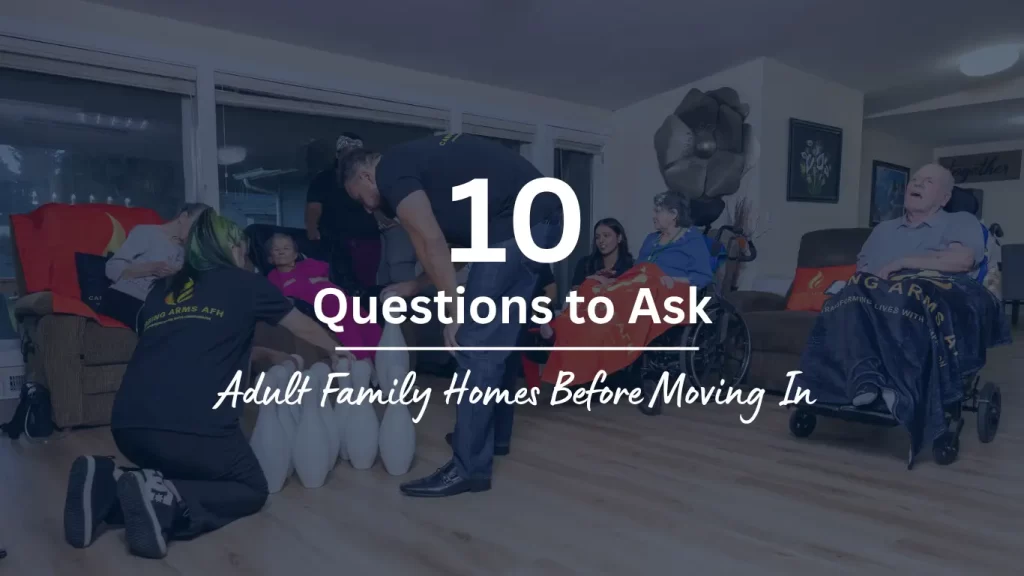
Here are your 10 questions you must ask a senior care home before you or your parents move in:
- Is the Adult Family Home Licensed in Washington State and Does It Follow All State Regulations?
- What Is the Caregiver-to-Resident Ratio Throughout the Day and Night?
- What Services Are Included in the Monthly Cost, and What May Be Additional?
- What Training, Experience, and Stability Do the Caregivers Have?
- How Are Care Plans Created, Personalized, and Updated Over Time?
- What Is the Process for Handling Medical Emergencies and Urgent Situations?
- Does the Home Support Aging in Place as Care Needs Increase?
- What Does Daily Life Look Like for Residents in the Home?
- Can Residents Personalize Their Room and Living Space?
- Can Families Visit Freely and Speak With Others Who Have Experience With the Home?
Read them one by one below so you know why you should ask these questions and provide a better senior living environement for your aging parents.
1. Is the Adult Family Home or Senior Care Facility Licensed in Washington State and Does It Follow All State Regulations?
In Washington, every adult family home, or senior living facilities like alf, or memory care facility is required to be licensed through the Department of Social and Health Services (DSHS). This license is not just a formality. It confirms that the home meets state-defined standards for safety, staffing, care practices, and resident rights. Facilities are also subject to routine inspections, and those reports are publicly available for review.
You can read our latest article “How to Choose a Senior Care Home in Bonney Lake: A Simple Guide for selecting best care homes for Mom or Dad“, to find how to verify a Licensed Senior Care Homes in Washington.
At Caring Arms, our licenses are always active and in good standing, and we openly share inspection history with families who want to understand how we operate. This level of transparency helps families feel confident in what they are choosing.
When you are evaluating a home, it is important to look beyond whether a license exists. You want to understand how consistently the home meets those standards over time. A well-managed home will not hesitate to walk you through their compliance record, explain how they meet regulations, and answer questions about past inspections in a clear and respectful way.
Why is it required: Choosing a home that is properly licensed and compliant is not only about meeting legal requirements. It also protects your family from potential complications in the future. If a home operates outside of regulatory oversight, there may be gaps in safety protocols, staff training, or emergency preparedness. In situations where care concerns arise, families may have limited recourse or support if the provider is not fully regulated. There can also be challenges related to insurance claims, accountability, and continuity of care if the home does not meet state standards.
For families trying to make the best possible decision, licensing should be seen as a foundation. It does not guarantee everything, but it ensures that the home is operating within a system designed to protect residents and maintain a consistent level of care.
2. What Is the Caregiver to Resident Ratio Throughout the Day and Night?
How many caregivers are available at any given time inside a facility directly affects daily care received by elder seniors. In adult family homes, or senior living facilities this ratio can vary depending on how the home is structured and how care is managed across shifts.
In smaller, well-run homes, it is common to see more attentive ratios, sometimes as close as one caregiver for every two or three residents. This allows caregivers to respond more quickly, spend more time with each resident, and notice small changes in behavior or health that might otherwise go overlooked.
When asking this question, it is helpful to understand how staffing changes throughout the day. A home may appear well-staffed during visiting hours, but overnight coverage is equally important. You want to know who is present at night, how emergencies are handled during those hours, and whether caregivers are awake and actively monitoring residents or simply on-call.
Why is it required: A consistent and appropriate staffing ratio contributes to both safety and quality of life. It affects how quickly assistance is provided, how meals are managed, how medications are administered, and how engaged residents feel throughout the day. When staffing is stretched too thin, even well-intentioned caregivers may struggle to maintain the level of attention that residents deserve.
From a long-term perspective, staffing also impacts stability. Homes with strong caregiver support tend to have lower burnout, better consistency, and stronger relationships between staff and residents. This continuity often becomes one of the most meaningful aspects of care for families.
3. What Care Services Are Included in the Monthly Cost, and What May Be Additional?
Understanding the financial structure of care is essential before making any commitment. In senior living facilities, monthly costs can vary depending on the level of care required, the services provided, and the overall setup of the home.
A transparent care provider will clearly explain what is included in the base monthly rate. This typically covers core services such as assistance with daily activities, meals, medication support, housekeeping, and basic supervision. However, certain needs may require additional support, and those services may be priced separately.
It is important to ask for a clear explanation in writing so you understand exactly what you are paying for. This helps prevent confusion later and allows you to compare different homes fairly. It also gives you a clearer picture of how costs may change over time if your loved one’s needs increase.
Why is it required: Financial clarity is not just about budgeting. It also reflects how a home operates. Providers who communicate pricing openly tend to be more organized and more respectful of family expectations. On the other hand, vague or inconsistent pricing can lead to misunderstandings, especially during times when care needs change quickly.
Families often feel more confident when they understand both the current cost and the possible future scenarios. This allows them to plan ahead without feeling uncertain about unexpected expenses.
4. What Training, Experience, and Stability Do the Caregivers Have?
The quality of care in any adult family home is shaped by the people providing it. Caregivers are responsible not only for daily support but also for observing changes in health, responding to emergencies, and creating a sense of comfort for residents.
When speaking with a provider, it is important to understand how caregivers are selected, trained, and supported. This includes formal training requirements, background checks, and experience with specific conditions such as dementia, mobility challenges, or post-hospital recovery.
Equally important is the stability of the team. Homes with consistent caregivers tend to provide better care because staff members become familiar with each resident’s routines, preferences, and subtle health indicators. This familiarity allows for more personalized care and stronger emotional connections.
Frequent staff changes, on the other hand, can disrupt routines and create uncertainty for residents. It may also indicate deeper operational challenges within the home, such as burnout, lack of support, or inconsistent management.
Why is it required: From a family’s perspective, knowing who is caring for your loved one and trusting their experience brings a level of reassurance that goes beyond credentials alone. It creates confidence in the day-to-day environment your loved one will be living in.
5. How Are Care Plans Created, Personalized, and Updated Over Time?
Every resident enters care with a unique combination of medical needs, personal habits, and emotional preferences. A well-structured senior care home recognizes this and builds care plans that reflect the individual, not just the condition.
The process usually begins with an initial assessment that looks at health history, daily routines, mobility, dietary needs, and personal preferences. However, what matters more is how that plan evolves over time.
Care needs rarely stay the same. As conditions change, the level of support required may increase or shift. A reliable home will have a clear process for reviewing and updating care plans regularly, while also keeping families informed and involved in those decisions.
Why is it required: Personalization is what separates a standard care experience from a meaningful one. When caregivers understand how a resident prefers their morning routine, how they like their meals, or what activities bring them comfort, the entire experience becomes more natural and less clinical.
Families should feel confident that care is not static. It should adapt in a way that continues to support both physical well-being and emotional comfort.
6. What Is the Process for Handling Medical Emergencies and Urgent Situations?
Medical emergencies are unpredictable, and the way a home responds in those moments can make a critical difference. Understanding this process in advance provides clarity and reassurance.
A well-prepared adult family home & assisted living facility will have clearly defined protocols for different types of emergencies. This includes immediate response actions, coordination with emergency services, communication with family members, and follow-up care after the situation is stabilized.
It is also important to understand who is present during these situations and what level of medical support is available within the home. Some homes may have access to nursing oversight, while others coordinate closely with external healthcare providers.
Beyond the technical process, communication plays a key role. Families should know how quickly they will be informed, what information will be shared, and how decisions are made during urgent situations.
Why is it required: When a home can explain this process clearly and confidently, it reflects preparation and experience. It shows that the team is not reacting for the first time but is operating within a system that is designed to handle these situations effectively.
7. Can the Home Support Aging in Place as Care Needs Increase?
Transitions can be difficult, especially for seniors dealing with memory challenges or declining health. Because of this, a common concern in families looking for senior care facilties is- do their loved one will need to move again in the future
Aging in place means that the home can continue to support a resident as their needs grow. This may include higher levels of assistance, specialized dementia care, or end-of-life support such as hospice services.
Why is it required: Choosing a home that offers this continuity can reduce stress for both the resident and the family. It allows the individual to remain in a familiar environment, surrounded by caregivers who already understand their needs. Understanding the home’s capabilities early helps families plan with confidence and avoid unexpected transitions later.
When a home cannot accommodate increasing care requirements, families may face the difficult decision of relocating their loved one at a vulnerable stage. This can impact emotional stability and overall well-being.
8. What Does Daily Life Look Like for Residents in the Home?
Daily life is where care becomes real. Beyond medical support, the environment, routines, and interactions shape how a resident feels each day.
Top rated senior care facilities like Caring Arms Adult Family Homes of Washington create a balance between structure and flexibility. Residents should have opportunities to engage in activities, interact with others, and maintain a sense of independence, while also having the freedom to follow their own preferences.
Observing or discussing a typical day can reveal a lot about how the home operates. It shows how meals are handled, how caregivers interact with residents, and whether there is a sense of calm and consistency in the environment.
Why is it required: Social interaction, even in small ways, plays a significant role in emotional well-being. A home that encourages connection while respecting personal space creates a healthier and more supportive atmosphere. Families find reassurance when they can picture how their loved one’s day will unfold in a setting that feels comfortable and engaging.
9. Can Residents Personalize Their Room and Living Space?
Moving into a new place can feel overwhelming, especially for seniors who have spent years in a familiar home. Personal belongings help bridge that transition and create a sense of comfort.
Adult family homes that allow residents to bring furniture, photographs, and personal items tend to feel more like a home rather than a facility. These details may seem small, but they have a meaningful impact on how quickly a resident adjusts and to what extant can they go to ensure your family stays emotionally in good state.
Why is it required: A personalized space supports emotional well-being by maintaining a connection to memories, routines, and identity. It also helps caregivers understand the resident better through the environment they create.
Restrictions on personalization may indicate a more rigid or institutional setup, which can affect how comfortable the space feels over time.
10. Can Families Visit Freely and Speak With Others Who Have Experience With the Home?
Transparency is one of the strongest indicators of a well-run home. Families should feel welcome to visit, observe daily routines, and ask questions without hesitation.
Speaking with other families who have experience with the home can provide valuable insight. These conversations often reveal details that go beyond formal explanations and help you understand what daily life is truly like.
Visiting during different times of the day, including meals or busy periods, allows you to see how the home functions in real situations. It also gives you a sense of how residents are treated and how caregivers interact with them.
Why is it required: A home that encourages openness and communication demonstrates confidence in the care it provides. This level of transparency builds trust and helps families feel more secure in their decision.
Final Thoughts
Choosing an adult family home or a small private senior living facility is more than just about comparing services. It is about understanding how your loved one will live, feel, and be cared for every single day.
When you ask these questions, you move beyond surface-level information and begin to see the true quality of a home. That clarity allows you to make a decision that feels right, not just logically, but emotionally as well.
For families across Pierce County and Washington, taking the time to ask, observe, and understand is what leads to the best outcomes.
If not sure of how and where to find a good senior living facility, try this:
Book a tour to caring Arms Adult Family Homes. It is one of the best rated adult family home for memory care and hospice care in Greater Seattle that has transaprent pricing, offers all the care needed for elder seniors- from basic daily assisted living to offering care for specialized and long term illness like Dementia or Parkinson’s. The homes are spread across Greater Seattle Area, located in Bonney lake, Puyallup, Sumner, Des Moines, Federal Way, Kent, Kirkland, Sumner, Shoreline, Maple Valley and Allyn.
Book a tour to Caring Arms Adult Family Homes, or call our team at Caring Arms AFH for inquiries.