Will Your Elder Senior Be Treated Like Human in a Care Home, and Not Managed Like a Number?
A Bonney Lake Family’s Guide to Choosing Senior Living
There is a kind of worry that does not leave you once it begins.
It follows you into work.
It sits beside you during dinner.
It comes back at night when the house gets quiet.
You start replaying small things that did not seem small at all – the missed medicine, the slower steps, the repeated question. the untouched meal, the silence that stayed a little longer than usual.
And then, without saying it out loud at first, your heart begins asking something difficult:
What happens when love is no longer enough to keep someone safe on its own?
That is where this journey usually starts.
Not with a brochure.
Not even with a facility.
It starts with the weight of responsibility.
It starts with someone trying to be strong for a parent while quietly realizing that things have changed. It starts with a son or daughter doing everything they can, while also feeling that deep and painful tension between wanting to keep a loved one close and knowing more support may now be needed.
And that is where another emotion enters the room almost immediately.
Why This Decision Can Feel Like Betrayal
For many people, finding a senior living home does not just feel like a practical decision. It feels personal. Heavy. Uncomfortable. Sometimes it even feels like betrayal.
You may know your loved one needs more help.
You may know home is becoming harder to manage safely.
You may know you cannot do everything alone forever.
And still, part of you wonders:
Am I giving up on my mom or dad? Because they gave their world for us.
Will they think I am abandoning them?
Will they feel pushed aside?
This is the guilt many families carry.
Not because they do not care enough. Because they care so deeply that the decision feels tied to love, loyalty, duty, and memory all at once.
That is why choosing a care home is never just about finding a room.
It is about finding a place where the person you love will still be treated like themselves.
Not like a task, not like a schedule, not like a chart, not like a number.
The Question That Matters More Than the Tour
A place can look beautiful and still not feel right.
The furniture can be expensive.
The lobby can be polished.
The sales conversation can be smooth.
The photos can look comforting.
But none of that tells you what happens in the ordinary moments of care.
It does not tell you how someone is spoken to when they are confused.
It does not tell you whether a caregiver responds with patience or irritation.
It does not tell you whether anyone notices a change in mood, appetite, mobility, or memory.
It does not tell you whether your loved one will feel known there.
And that is why one question matters more than appearances:
Will my loved one be cared for like a person here, or simply managed like a number?
That one question can reveal more than a polished tour ever will.
The Fear Families Are Really Carrying
Most families are not only afraid of the worst-case scenario.
Yes, people worry about falls, missed medication, wandering, or medical emergencies. Those fears are real. But many families are equally afraid of something quieter.
They are afraid of emotional coldness.
They are afraid their parent will be spoken to impatiently.
They are afraid no one will truly notice when something changes.
They are afraid a loved one will sit through the day supervised, but not seen.
They are afraid of a place that knows how to manage routines but does not know how to protect dignity.
That fear is not dramatic. It is honest.
Because seniors do not only need assistance.
They need kindness.
They need patience.
They need familiar faces.
They need to feel safe emotionally, not just physically.
Federal long-term-care guidance places clear importance on dignity, respect, self-determination, and freedom from abuse or neglect in care settings, which reflects how central humane treatment is to quality care.
Not Every Place That Offers Care Feels Caring
This is a truth more families need to hear.
Not every care setting is built with the same heart.
Some are warm, attentive, and deeply respectful.
Some are efficient, but emotionally flat.
Some look impressive, but feel distant once the daily routine begins.
Some may focus more on occupancy, operations, and appearances than on what daily life actually feels like for residents.
That does not mean every large facility is bad. It does mean families should be careful about assuming that size, polish, or branding automatically mean better care.
Sometimes the warning signs are subtle:
– a rude tone.
– a rushed answer.
– a caregiver speaking over a resident.
– a team that sounds polished but vague
– residents who look clean, but disconnected.
– an environment that feels organized, but not warm.
These things matter because they show whether care is truly personal or simply procedural.
What That Movie – “I Care a Lot” Got People Thinking About
A lot of families carry a quiet fear that older adults can be overlooked, manipulated, or reduced to transactions. That is one reason the film I Care a Lot struck such a nerve. It is a fictional story centered on guardianship abuse and financial exploitation of older adults, and while it is not a documentary, it resonated because the fear behind it feels recognizable. Discussions of the film and related commentary have connected it to public awareness of elder abuse and exploitation concerns.
That does not mean families should become cynical about every senior care home.
It means they should become wiser.
Luxury is not the same as love.
A polished building is not the same as patience.
A sales promise is not the same as daily dignity.
The question is not only what a place says. The question is who your loved one becomes in that environment.
Do they feel calmer there?
Do they feel respected there?
Do they feel spoken to, not spoken over?
Do they feel safe enough to rest?
Do they feel like they still matter?
What Good Care Actually Feels Like. Look for the Green Signals
Good care is rarely loud.
It often reveals itself in the smallest moments.
A caregiver who remembers a preference.
A calm voice during confusion.
A respectful tone during personal care.
A thoughtful meal.
A clean, comfortable room.
A familiar face that notices when something feels off.
A team that updates the family honestly.
A routine that protects dignity rather than stripping it away.
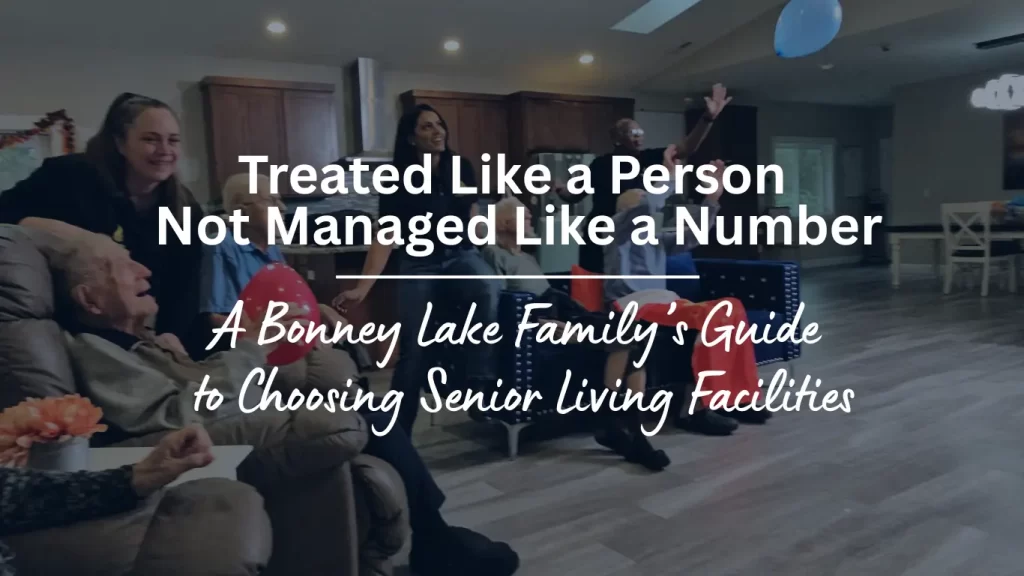
Good care feels human.
It does not make someone feel processed.
It does not make a resident feel like a burden.
It does not reduce a whole life into a checklist.
It protects the person inside the care.
What You Should Look For Before Choosing Any Senior Living Home
When you visit a care home, pay attention to more than features.
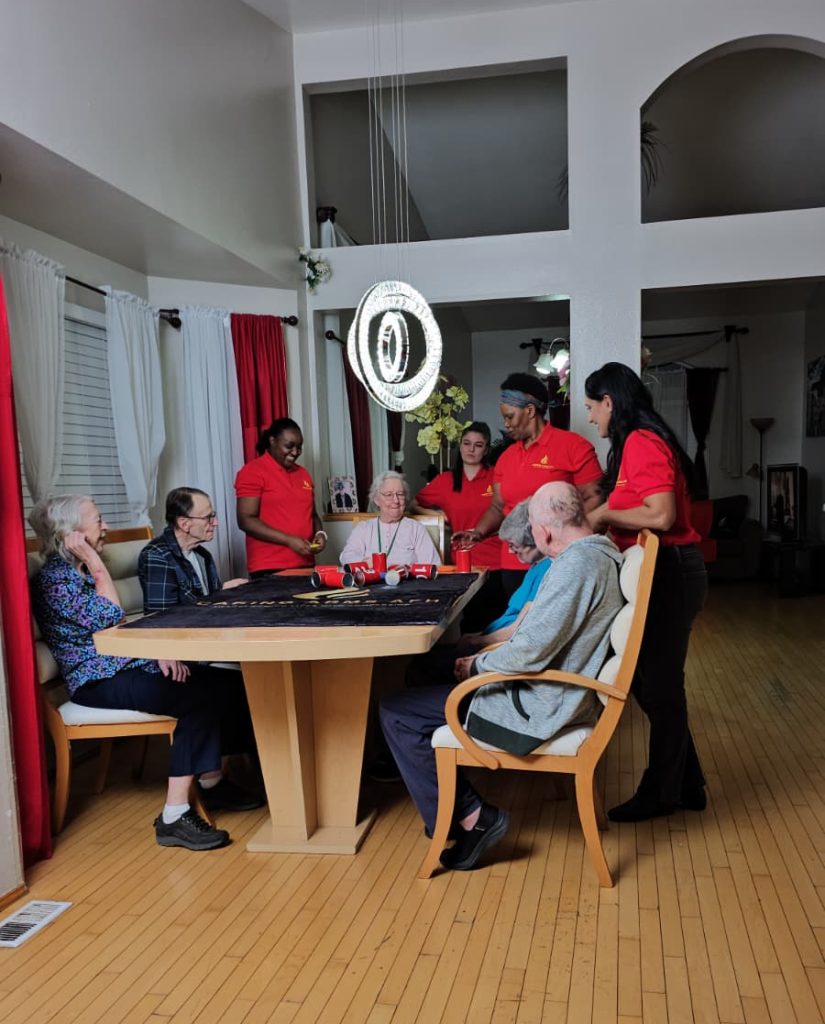
Listen to the tone, watch the interactions, notice the little things.
How do staff speak to residents? Do they sound patient, calm, and respectful?
Do caregivers make eye contact? Do they greet residents like people they know?
Do residents seem comfortable? Do they seem emotionally present, or just physically there?
Does the home feel peaceful in a warm way, or quiet in a disconnected way?
Can the team answer direct questions clearly? Or do the answers feel overly polished and vague?
A good care home should not be afraid of thoughtful questions. It should welcome them.
You must ask:
– Who provides day-to-day care?
– How do you hire and train caregivers?
– How do you handle memory-related behaviors?
– What happens if my loved one becomes more withdrawn or confused?
– How do you communicate with families?
– What kind of staff behavior is not tolerated here?
– How do you help new residents feel safe and comfortable?
The answers matter. But the feeling and what you notice matters too.
Why Smaller Care Homes Often Feel More Personal
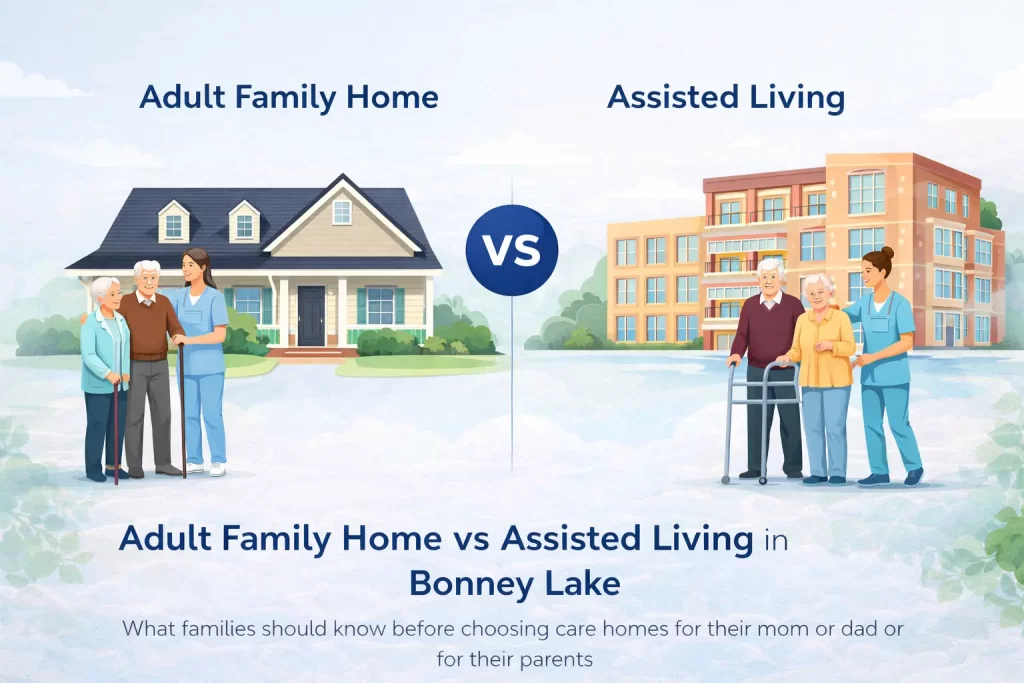
This is one reason many families begin looking more closely at adult family homes.
In Washington, an adult family home is a licensed residential home where personal care, room and board, and help with daily living are provided to more than one and typically not more than six unrelated adults, with expansion to eight only by approval. That smaller structure can make more individualized attention possible.
That does not automatically make every small home excellent.
But it does create the possibility for something many families are truly hoping to find: a setting that feels less institutional and more personal.
A place where your loved one is more likely to be remembered by name, habit, routine, preference, and personality. A place where care can feel closer, calmer, and more familiar.
For many families, especially those trying to avoid an environment that feels rushed or impersonal, that difference matters more than appearances ever could.
Our Belief in Caring Arms Adult Family Homes in Washington and Belle Vie of Allyn
At Caring Arms, we believe senior care should never feel cold, hurried, or transactional.
It should feel respectful.
It should feel attentive.
It should feel safe.
And it should feel personal in the ways that matter most.
Caring Arms publicly describes its homes as small, family-like adult family homes in Greater Seattle communities including care homes in Bonney Lake, Maple Valley, Shoreline, Allyn, and nearby locations with personalized care, assisted living support, memory care, and daily living help designed around dignity and comfort.
That belief matters because the elder stage of life deserves more than supervision.
It deserves warmth.
It deserves patience.
It deserves real human regard.
We are located at:
8910 Angeline Rd E, Bonney Lake, WA 98391, United States
To skip the queue, and speak with our facility owner, you can call us at: 253-486-8940 for showing our homes and people around.
If you have made up your mind to place your elder senior into a care home, we hope we have guided you in making the right choice.
Final Thought:
Before choosing any senior living home, pause and ask the one question that cuts through everything else:
Will my loved one be treated like a person here?
Not just monitored.
Not just assisted.
Not just housed.
But, will they be treated like a person with respect and dignity, like a human.
Because if that answer is strong, many other answers become easier.
And if that answer feels weak, no beautiful lobby, sales pitch, or polished brochure can make up for it.
Choose the place where your loved one will be respected.
Choose the place where they will be noticed.
Choose the place where dignity is not optional.
Choose the place where care still feels human.
That is the kind of place that matters for your mom and dad. They have given up their world for you.