
Choosing Dementia Care in Bonney Lake: 10 Things Most Care Homes Don’t Tell Families
Choosing a dementia care home for someone you love is one of the most difficult decisions families face.
Many people begin their search feeling overwhelmed. They read websites, compare facilities, and ask the same question again and again:
How do I know my loved one will truly be cared for?
Most senior living websites talk about services, amenities, and rooms. Those things matter, but families quickly realize something deeper is at stake.
Dementia changes how a person experiences the world. Memory loss can create confusion, anxiety, and emotional distress. Because of this, the quality of dementia care depends less on buildings and more on how caregivers respond to residents every day.
After more than 18 years working in senior care and operating adult family homes, we have learned that great dementia care is defined by compassion, patience, and understanding.
Families looking for memory care or dementia care homes in Bonney Lake, or anywhere in the world deserve honest information before making such an important decision. The following insights highlight what many families only discover after visiting multiple care homes.
What Is Dementia Care and How Is It Different From Assisted Living
Many families initially believe dementia care is the same as assisted living. While both provide support for seniors, dementia care requires a much more specialized approach.
Assisted living typically focuses on helping seniors with daily activities such as bathing, dressing, medication reminders, and meal preparation. Residents often maintain a significant level of independence and cognitive ability.
Dementia care, however, is designed specifically for individuals living with Alzheimer’s disease or other forms of memory loss. Residents may experience confusion, changes in behavior, emotional distress, difficulty communicating, and wandering.

Because dementia affects the brain, caregivers must understand how cognitive decline influences behavior and perception. A resident may become anxious simply because they do not recognize their surroundings. They may repeat questions, misinterpret situations, or become frustrated when they cannot remember something.
Quality dementia care requires caregivers who are trained to respond calmly, redirect behavior gently, and provide reassurance rather than correction. The environment must also be structured to reduce confusion while promoting safety and comfort.
This specialized approach is what allows individuals living with dementia to maintain dignity and stability despite the challenges of memory loss.
Why Is Understanding Dementia Behavior So Important in Care Homes?
One of the biggest misconceptions about dementia care is that caregivers simply need to supervise residents. In reality, dementia care requires a deep understanding of why certain behaviors occur.
When a person living with dementia becomes agitated, confused, or resistant, there is usually an underlying reason. They may be feeling overwhelmed by noise, struggling to communicate discomfort, or trying to locate something familiar from their past.
Caregivers who understand dementia behavior recognize that these reactions are not intentional or personal. Instead of correcting the resident or becoming frustrated, trained caregivers respond with patience and reassurance.
For example, if a resident repeatedly asks the same question, the caregiver understands that the resident may not remember receiving the answer earlier. Responding calmly each time prevents unnecessary stress.
At Caring Arms Adult Family Homes in Bonney Lake, caregivers are trained to observe behavioral patterns and respond with techniques that reduce anxiety and confusion. These approaches help residents feel more secure and supported throughout the day.
Understanding behavior is what transforms caregiving into compassionate dementia care.
Why Do Dementia Caregivers Need to Slow Down?
One of the most overlooked aspects of dementia care is the pace of caregiving.
In larger facilities, staff members often work on tight schedules. Residents must follow structured routines for meals, medications, and daily activities. While organization is important, strict schedules can sometimes create stress for individuals living with dementia.
Dementia changes how the brain processes information. A simple request such as getting dressed or preparing for a meal may require additional time and reassurance. When caregivers rush these moments, residents may feel confused, pressured, or anxious.
Experienced dementia caregivers understand that slowing down is not inefficient—it is necessary.
Taking time to explain tasks calmly, offering reassurance, and allowing residents to move at their own pace helps maintain dignity and emotional comfort. Residents often respond more positively when caregivers approach them gently and patiently.
At Caring Arms Adult Family Homes, caregivers focus on creating a calm and supportive environment where residents are never rushed. This approach allows seniors living with dementia to feel respected while receiving the assistance they need.
Does a Smaller Dementia Care Home Provide More Personalized Attention?
Many families discover an important difference when comparing large facilities with smaller adult family homes.
Large senior living communities may have many residents and rotating staff members. While these facilities can offer various amenities, caregivers may be responsible for several residents at once.
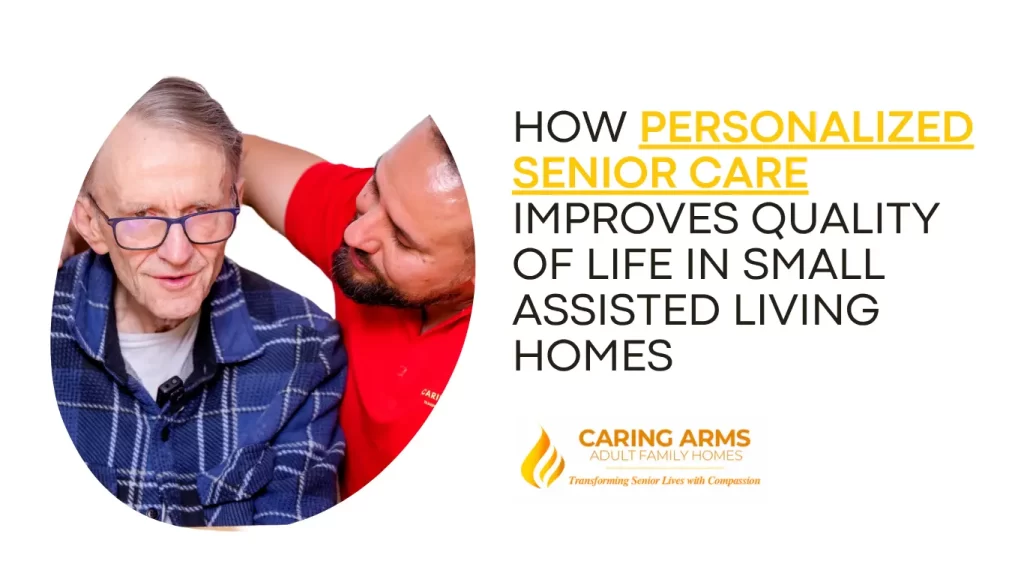
In smaller residential care homes, caregivers often develop close relationships with residents because they interact with them consistently throughout the day.
This familiarity allows caregivers to learn personal details about each resident, including their routines, preferences, and emotional triggers. Knowing what comforts a resident or what situations create confusion can significantly improve the quality of care.
For individuals living with dementia, familiarity provides stability. Seeing the same caregivers regularly and living in a calm home environment often reduces anxiety and behavioral distress.
Caring Arms Adult Family Homes was designed with this philosophy in mind. By maintaining a home-like setting and focusing on personalized care, caregivers are able to build meaningful connections with every resident.
How Do Dementia Care Homes Prevent Wandering and Keep Residents Safe?
Wandering is one of the most common safety concerns for families caring for a loved one with dementia.
Many care facilities rely primarily on locked doors, alarms, or monitoring systems to prevent residents from leaving the building unsupervised. While security systems are important, effective dementia care focuses on prevention rather than restriction.

Experienced caregivers pay close attention to early signs that a resident may feel restless or confused. Pacing, searching behavior, or repeated attempts to leave a room can indicate that a resident is trying to fulfill a need or resolve confusion.
When caregivers notice these signals early, they can redirect the resident with conversation, activities, or reassurance before wandering becomes a safety risk.
At Caring Arms Adult Family Homes, safety is approached through attentive caregiving as well as secure environments. By understanding the emotional triggers behind wandering behavior, caregivers can reduce stress while protecting residents from harm.
This balanced approach allows residents to feel safe without feeling confined.
Why Should Dementia Care Feel Like Home Instead of a Facility?
The environment of a care home has a powerful effect on individuals living with dementia.
Clinical or institutional settings can sometimes increase confusion because they feel unfamiliar and impersonal. Long hallways, hospital-like rooms, and constant activity may overwhelm residents who already struggle to interpret their surroundings.
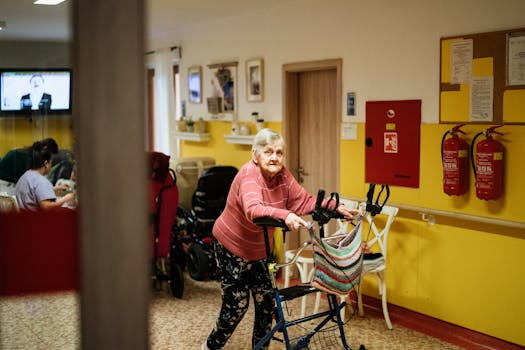
A home-like environment can make a significant difference in emotional comfort.
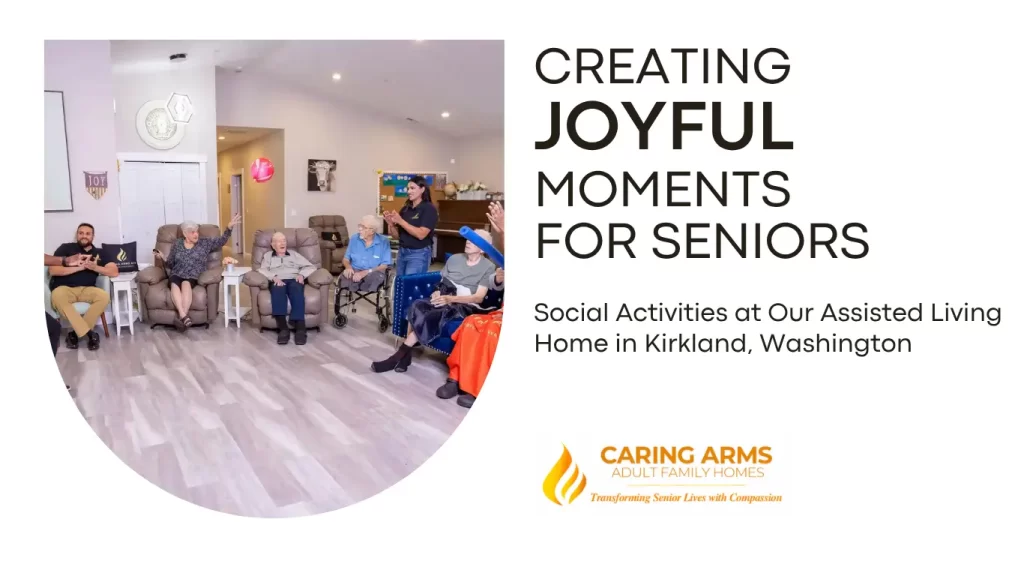
When residents share meals together, relax in familiar living spaces, and interact with caregivers who feel like extended family, the atmosphere becomes more comforting and predictable. These small daily experiences help residents maintain a sense of normalcy.
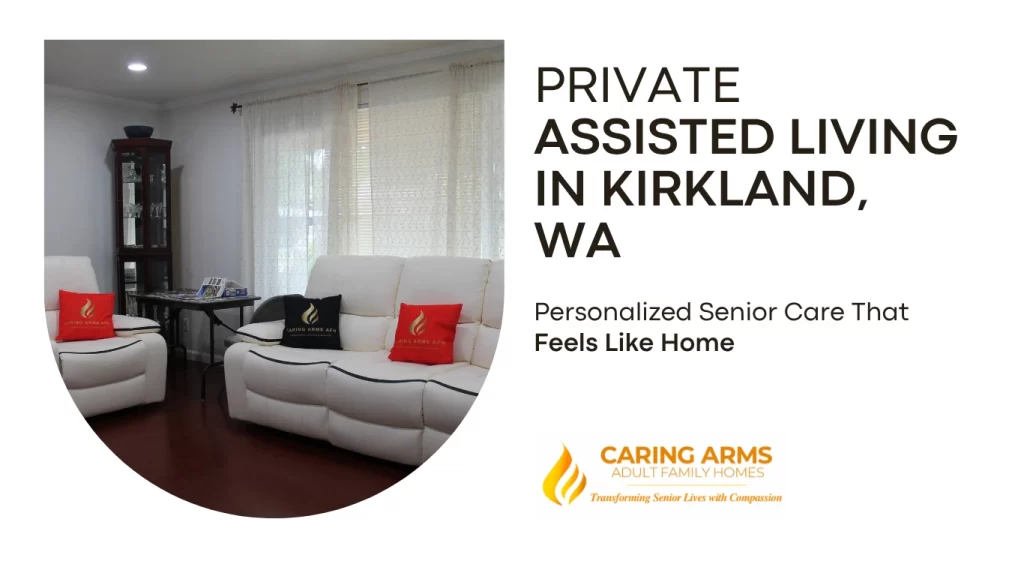
Caring Arms Adult Family Homes was designed to create this kind of supportive environment. Instead of feeling like a medical facility, the home provides a warm and welcoming space where residents can continue experiencing daily life with dignity.
For families, knowing their loved one lives in a place that truly feels like home often brings tremendous peace of mind.
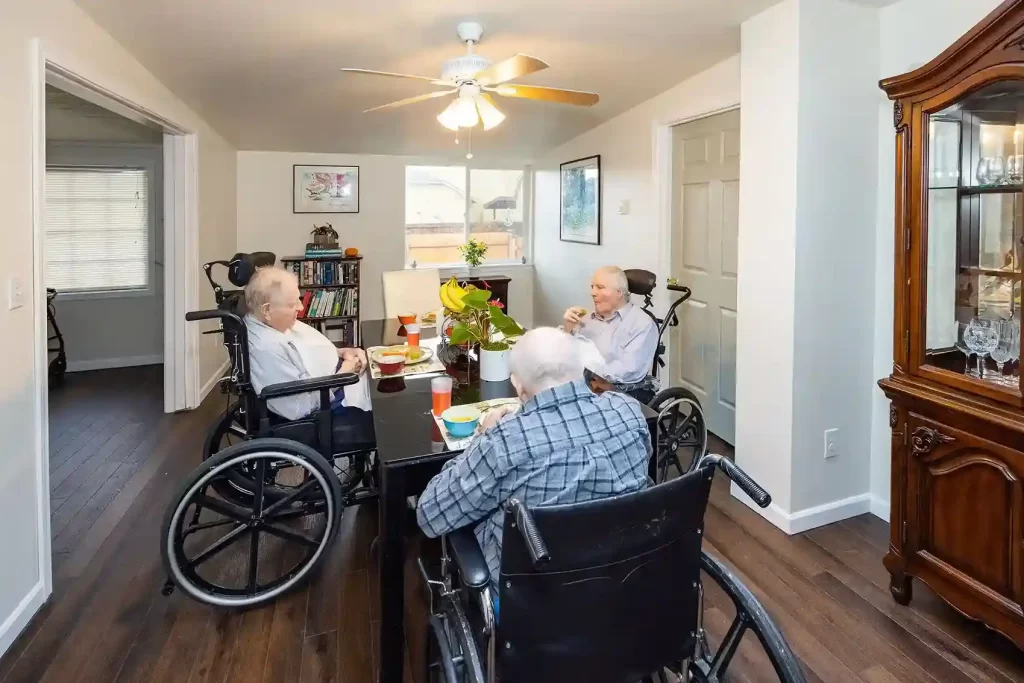
Why Are Home-Cooked Meals Important in Dementia Care?
Meals are often one of the most meaningful parts of a resident’s day.
For seniors living with dementia, familiar smells and flavors can trigger positive memories and create a sense of comfort. Unfortunately, institutional meal services sometimes feel impersonal or rushed.
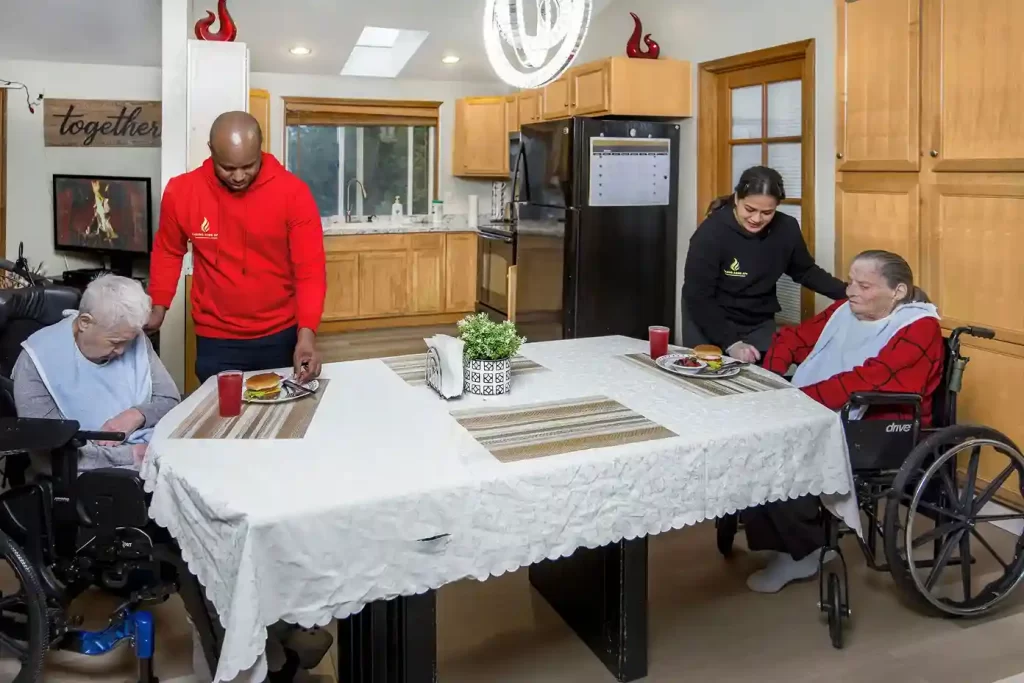
Freshly prepared meals in a home environment provide more than just nutrition. They create a social experience where residents gather together, interact with caregivers, and enjoy food that feels familiar.
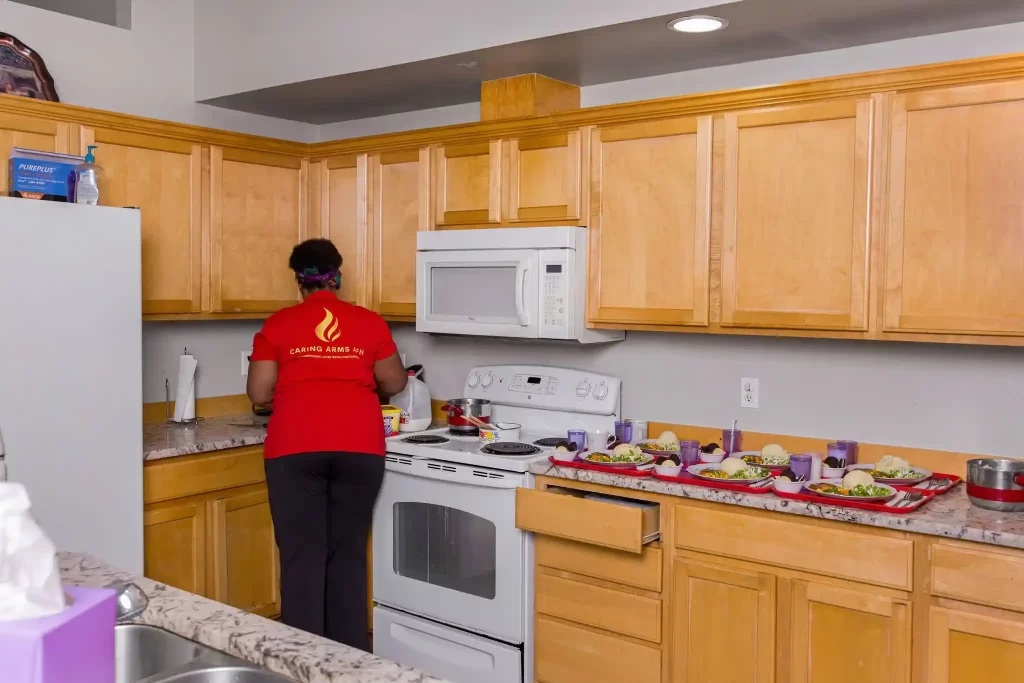
At Caring Arms Adult Family Homes, meals are prepared with the same care families would expect in their own kitchens. The goal is not simply to provide food, but to create a comforting routine that residents look forward to every day.
These small moments often have a surprisingly powerful impact on emotional well-being.
What Should Families Look for When Choosing a Dementia Care Home?
When families begin touring dementia care homes, it can be difficult to know what truly matters. Many facilities highlight amenities and services, but the quality of care is often reflected in everyday interactions.
- One of the most important questions to ask is how caregivers are trained to support individuals living with dementia. Specialized training helps caregivers understand behavioral changes, communication challenges, and emotional needs associated with memory loss.
- Families should also ask about the caregiver-to-resident ratio. When caregivers are responsible for fewer residents, they can provide more attentive and personalized care. This often leads to better emotional support and improved safety.
- Another key factor is how the care home prevents wandering. While security systems are necessary, proactive supervision and attentive caregiving play a major role in keeping residents safe.
- Meals and nutrition are also important considerations. Freshly prepared meals that resemble home cooking often encourage residents to eat regularly and maintain healthy routines.
- Finally, families should evaluate communication practices. Care homes should maintain open communication with families and provide updates about their loved one’s well-being. Knowing that caregivers are available to answer questions and share updates helps families feel more connected to the care process.
At Caring Arms Adult Family Homes in Bonney Lake, these principles guide every aspect of dementia care. Families are encouraged to visit, ask questions, and observe how residents interact with caregivers before making a decision.
How Can Families Recognize a High-Quality Memory Care Home?
During a tour, families can often sense the quality of a dementia care home through simple observations.
Caregivers should speak to residents calmly and respectfully, even when assisting with challenging tasks. Residents should appear comfortable and engaged rather than distressed or isolated.
A clean, well-maintained environment is also essential, but cleanliness should still feel natural and welcoming rather than clinical. The home should feel like a comfortable living space rather than a hospital ward.
Another positive sign is seeing caregivers interact with residents beyond basic tasks. When caregivers sit with residents, talk with them, or share meals together, it often indicates a culture of compassion rather than routine caregiving.
These subtle details often reveal far more about a care home than brochures or marketing materials.
Visit Caring Arms Adult Family Homes in Bonney Lake
If you are currently searching for memory care, dementia care, or assisted living in Bonney Lake, we welcome you to visit Caring Arms Adult Family Homes and experience our approach to compassionate care.
Our goal is simple: provide seniors living with dementia a home where they feel safe, respected, and supported every day.
Families are always welcome to schedule a visit, ask questions, and learn more about how our caregivers support residents with patience, dignity, and compassion.
Schedule a tour today to see how a home-like environment can make a difference in dementia care
We are located at:
8910 Angeline Rd E, Bonney Lake, WA 98391, United States
To skip the queue, and speak with our facility owner, you can call us at: 253-486-8940
Frequently Asked Questions About Dementia Care
Memory care is a specialized form of senior living designed for individuals experiencing Alzheimer’s disease or other types of dementia. It includes trained caregivers, structured routines, and safety measures to support cognitive decline.
Families often consider dementia care when a loved one begins experiencing safety concerns, frequent confusion, wandering, or difficulty managing daily activities independently.
Yes. Assisted living focuses on general support with daily activities, while dementia care provides specialized supervision and behavioral support tailored to memory loss.
Costs vary depending on the level of care, location, and services provided. Families should compare care quality, staffing levels, and the living environment when evaluating options.
Cost for Dementia Care in Private Senior Living Facilities in Bonney Lake like Caring Arms Adult Family Homes starts from $7,500. Call to know more.