
Why Seniors Struggle in Large Assisted Living Communities
And Why Smaller, Family-Style Homes Often Help Them Feel Like Themselves Again
For many families, the decision to move a loved one into assisted living doesn’t happen all at once.
It starts with small moments.
“She looks fine… but she’s not herself anymore.”
“He doesn’t complain, but he doesn’t seem happy either.”
“She eats, but barely.”
Physically, everything may appear stable. But emotionally, something has shifted.
Often, families assume it’s just age. Or the condition progressing.
But in many cases, the environment plays a much bigger role than anyone expects.
When a Place Looks Right—but Feels Wrong
Large assisted living communities can look impressive on the surface.
There are polished common areas, full activity calendars, long dining rooms, and dozens of residents moving through the day. Families tour these spaces hoping their loved one will feel safe, engaged, and supported.
And sometimes, for very independent seniors, that’s exactly what happens.
But for many older adults – especially those over 75 or living with memory loss, the experience can feel overwhelming rather than comforting.
What feels lively to a visitor can feel exhausting to a resident.

The Quiet Challenges Seniors Face in Large Communities
Too Many Faces, Not Enough Familiarity.
As we age, familiarity becomes grounding.
In large communities, seniors may interact with dozens of staff members and residents every week. New caregivers rotate in. Names change. Faces blur together.
For someone experiencing cognitive changes, this can create constant low-level stress.
Instead of feeling settled, they feel like they’re always adjusting.
They may stop asking questions.
They may withdraw.
They may simply wait.

When Care Becomes Efficient—but Impersonal
Large facilities often rely on structured systems to manage care efficiently. Tasks get done. Schedules are followed. Needs are met.
But seniors don’t just need care. They need connection.
Trust builds slowly, through repetition:
- The same caregiver in the morning
- The same voice at mealtime
- The same gentle rhythm to the day
When caregivers change frequently, that emotional continuity breaks – and seniors feel it, even if they can’t explain it.

Sensory Overload Is More Than Discomfort
Noise. Bright lights. Crowded dining rooms. Long hallways. Competing conversations.
By afternoon, it can all feel like too much.
For seniors living with dementia or Alzheimer’s, overstimulation often shows up as:
- Increased agitation
- Poor sleep
- Reduced appetite
- Emotional withdrawal
Not because care is lacking – but because the environment never truly slows down.
Losing Personal Rhythm
Seniors have lived full lives with personal routines.
Morning coffee by a window.
Quiet evenings.
Meals at their own pace.
In large communities, rigid schedules often replace these rhythms. Over time, that loss of control can quietly affect a senior’s sense of identity and independence.
They may stop making choices – not because they can’t, but because it no longer feels like it matters.
Memory Care and the Importance of Environment
For seniors with memory-related conditions, the environment is as important as medical support.
Recognition doesn’t come from instructions, it comes from repetition.
The same hallway.
The same chair.
The same caregiver helping with breakfast.
Large settings, even with dedicated memory care units, can unintentionally make it harder for seniors to orient themselves.
Families often notice:
- More confusion after the move
- Less engagement
- Emotional flattening
Not because the condition worsened, but because the setting stopped supporting who the person is.
What Families Often Notice First
Families usually sense something before they can name it.
“He used to talk more.”
“She doesn’t smile the same way.”
“He says everything is fine, but he sleeps most of the day.”
Seniors rarely complain. Many adapt quietly.
And that quiet adaptation can be mistaken for acceptanc – when it’s actually withdrawal.
Why Small, Family-Style Assisted Living Homes Feel Different
In smaller homes, the pace changes.
There are fewer residents.
Fewer caregivers.
Fewer transitions throughout the day.
And that’s where something important happens.
Residents know each other’s names.
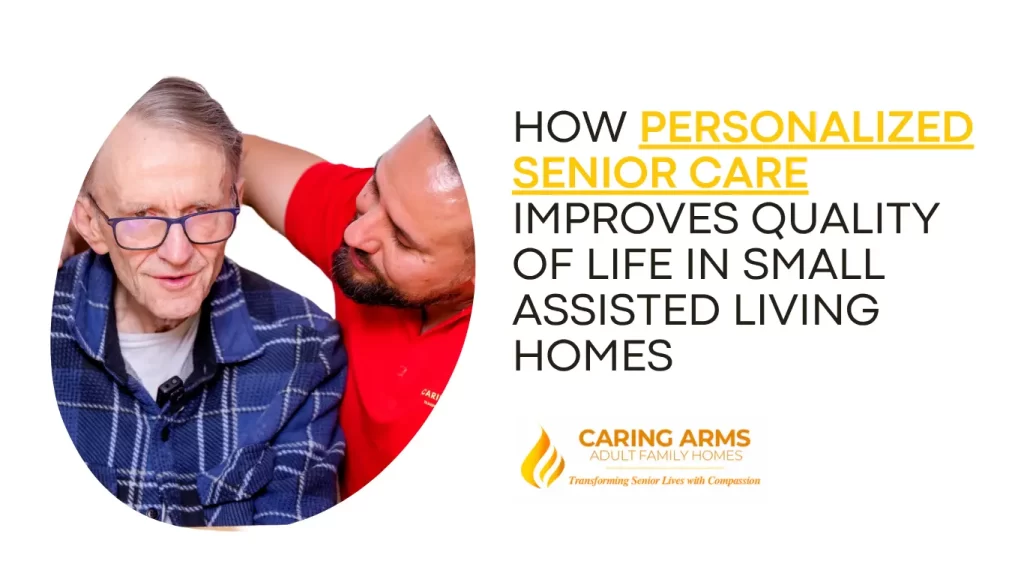
Caregivers recognize moods without being told.
Meals feel like shared moments, not scheduled services.
Life begins to feel familiar again.
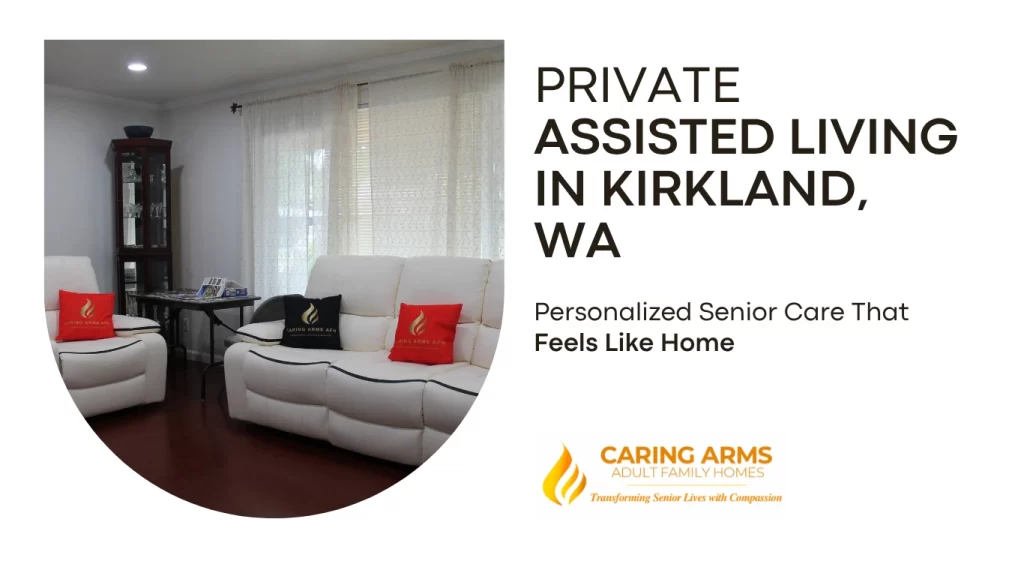
At Caring Arms Adult Family Homes, including Welcome Home Assisted Living in Shoreline, care is intentionally built around this family-style model – small homes with close-knit environments, consistent caregivers, and personalized attention.
That is how we support daily life of seniors in a way that feels natural.

Why This Matters for Families in Greater Seattle, Washington
Families in Washington often look for care that balances:
- A calm residential setting
- Close proximity to hospitals and clinics
- A sense of community rather than scale
Small assisted living homes fit naturally into this lifestyle.
They offer peace of mind without distance. Support without impersonality. Care without chaos.
For families who want to stay involved, communicate regularly, and feel confident about daily care, smaller environments often provide a better long-term experience.
Questions Families Should Ask Before Choosing Senior Living
Before making any decision, families should feel comfortable asking:
The answers reveal far more than brochures or tours ever can.
When Large Communities May Be the Right Fit
Large assisted living communities can be appropriate for seniors who:
- Are highly independent
- Enjoy busy social environments
- Thrive on variety and constant activity
There is no single right choice – only the right environment for the individual.
A Final Reflection
Aging doesn’t always mean needing more.
Often, it means needing less noise.
Fewer faces.
More familiarity.
The right assisted living environment doesn’t try to impress.
It simply feels steady. Recognizable. Human.
And for many seniors, that sense of home is what allows them to feel like themselves again.
Where Families Find This Kind of Care?
Families reading this often ask an important question:
“Is this type of care available near us?”
At Caring Arms Adult Family Homes, we provide small, family-style assisted living and memory care homes across multiple communities in Washington – each designed to offer the same calm, personalized environment described above.
Our homes serve families in:
- Bonney Lake
- Des Moines
- Sumner
- Puyallup (two locations)
- Federal Way
- Kent
- Kirkland
- Shoreline
- Maple Valley
- Allyn
Across all locations, we offer a consistent level of care that includes assisted living, memory care, dementia and Alzheimer’s support, Parkinson’s care, diabetic care, stroke recovery, respite stays, hospice support, and long-term care – all within small homes where residents are known by name, not room number.
Families are encouraged to explore the location closest to them and choose the setting that feels right for their loved one.